Jeremy Lacey, Partner and Development Director at Quadrant
For decades, office developers primarily worried about keeping buildings warm. Today, the challenge is increasingly the opposite; how to keep workplaces cool, comfortable and productive during ever more intense summer heatwaves, like those the UK has just experienced.
The built environment is entering unfamiliar territory. London recorded temperatures of 36.4°C in June and it was the warmest June on record, while climate models suggest periods of extreme heat will become more frequent in the years ahead.
The implications also stretch beyond employee comfort to overall business performance. Research from the International Labour Organization suggests productivity can fall by as much as 50% when temperatures exceed 34°C, while Climate X estimates overheating in London buildings could cost businesses more than £200 million annually in lost productivity by 2030.
For employers wanting staff to spend productive time in the office, an uncomfortable hot workplace is an obvious disadvantage. But the solution isn’t as simple as installing more or better air conditioning.
Conventional cooling systems consume significant amounts of electricity and expel heat into the surrounding environment, contributing to the urban heat island effect and creating a cycle where cities become hotter and buildings demand ever more cooling.
The challenge facing developers is therefore not just how to cool buildings, but how to create offices that remain comfortable in extreme temperatures without increasing emissions and energy costs.
Many offices across the UK were developed for a cooler climate. Large, glazed facades were often intended to maximise natural light and capture solar gain during colder months. Today, without the right mitigation measures, those same features can contribute to overheating.
Offices have also been designed around historic temperature ranges, with cooling systems calibrated to maintain internal conditions within a defined comfort band based on external temperatures of roughly 20-30°C.
These design assumptions are closely linked to factors such as glazing, insulation and the building’s overall thermal model. While this approach has underpinned building performance for years, it can leave assets exposed as periods of extreme heat become more frequent and prolonged.
As a result, developers and asset managers are increasingly revisiting design parameters, particularly on retrofit projects. In one major London refurbishment we’re working on, considerations are already being made for external temperatures approaching 40°C, with enhanced cooling capacity and additional chillers among the solutions being explored.
At the same time, the shift towards all-electric buildings, greater adoption of air and ground source heat pumps, and more sophisticated Building Management Systems are helping owners monitor energy use and optimise plant performance, improving resilience to a changing climate while supporting operational efficiency.
Prioritising passive cooling before mechanical intervention also makes sense. External shading, specially designed facades and high-performance glazing can prevent excess heat from entering a building in the first place. Because the most sustainable energy is the energy we never need to use, stopping heat gain is almost always more effective than removing heat after it arrives.
Landscaping is equally important. Green roofs, tree planting and well-designed public realm improvements help reduce local temperatures while delivering biodiversity and wellbeing benefits. In dense urban districts such as central London, where concrete and asphalt absorb and radiate heat long after sunset, vegetation can play an important role in moderating the microclimate.
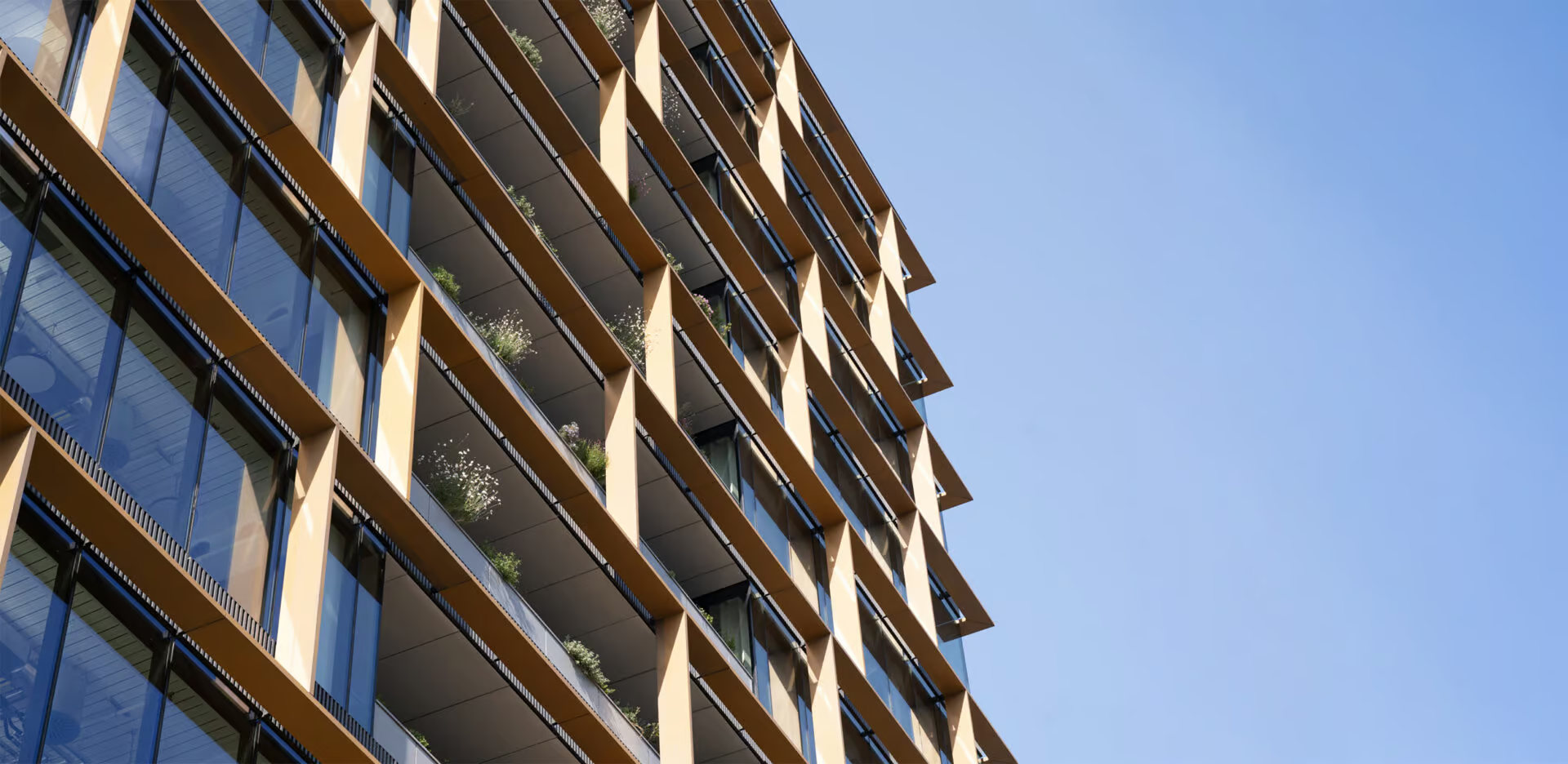
OSMO, our recently completed 166,000-square-foot BREEAM ‘Outstanding’ office building in Battersea was designed from the outset to combine climate resilience with leading sustainability performance.
This all-electric building is powered by 100% renewable energy and has achieved EPC A and NABERS 5 Star ratings, placing it among London’s most sustainable office developments. The building was designed to provide a comfortable working environment during increasingly warm summers without relying on excessive energy consumption.
OSMO’s predicted operational energy consumption is just 37kWh/m² per year, significantly below the Low Energy Transformation Initiative benchmark target of 55kWh/m². Lower energy use directly translates into reduced carbon emissions and lower occupational costs, demonstrating that climate resilience and operational efficiency can go hand in hand.
Multiple design features help achieve this outcome. High-performance glass panels filter out excessive solar heat while maintaining the natural light that occupiers like. OSMO also has over 2,000 plants, with terrace planting and a green roof that contribute to a cooler building environment and help reduce heat gain.
These measures not only improve thermal comfort but decrease the need for active cooling. Intelligent building systems and controllable app-based air conditioning and ventilation boost efficiency, while increasing occupant control and comfort.
This combination of passive design, technology and energy efficiency points towards a broader shift that the office sector must embrace. Discussions around sustainable buildings have traditionally centred on reducing carbon emissions. While this remains essential, climate adaptation must now sit alongside decarbonisation as an equally important priority.
Investors are increasingly recognising that climate resilience will become a defining feature of long-term asset value. Buildings that cannot maintain comfortable conditions while operating sustainably during periods of extreme heat may face declining occupier demand and higher future retrofit costs.
The good news is the industry already possesses the tools to address this challenge. By combining passive cooling, smart building technology, green infrastructure and energy-efficient design, developers can create offices that are both climate-resilient and low carbon.
With soaring summer temperatures set to be the norm, the most successful workplaces of the future will not be those that simply cool harder, but those that have been designed to stay cool in the first place.